完整的TM3證照資訊和資格考試的領導者和最新的最新TM3題庫
Wiki Article
BONUS!!! 免費下載VCESoft TM3考試題庫的完整版:https://drive.google.com/open?id=1_PB2St78S66ngBuuJm6y-qhZlCsQUkR1
如果你確定想要通過BCS TM3認證考試,那麼你選擇購買VCESoft為你提供的培訓資料是很划算的。因為小小的投資時可以換來很大的收穫,使用VCESoft提供的BCS TM3認證考試測試題目和練習題可以確保你通過考試的。VCESoft是一個個信譽很高的專門為參加BCS TM3認證考試的IT專業人士提供模擬題及練習題和答案的網站。
BCS TM3 考試大綱:
| 主題 | 簡介 |
|---|---|
| 主題 1 |
|
| 主題 2 |
|
| 主題 3 |
|
最新TM3題庫 & TM3題庫最新資訊
如果你使用了我們的BCS的TM3學習資料資源,一定會減少考試的時間成本和經濟成本,有助於你順利通過考試,在你決定購買我們BCS的TM3之前,你可以下載我們的部門免費試題,其中有PDF版本和軟體版本,如果需要軟體版本請及時與我們客服人員索取。
最新的 Test Manager TM3 免費考試真題 (Q20-Q25):
問題 #20
The diagram below shows an incomplete defect management process, where three states (states X, Y and Z) have yet to be named appropriately.
Which of the following labels would correctly complete the process?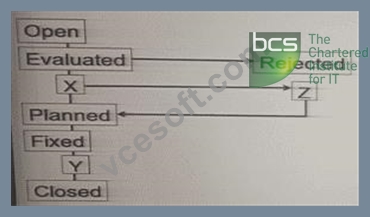
- A. X: Approved, Y: Reviewed, Z: Deferred.
- B. X: Accepted, Y: Reviewed, Z: Duplicate.
- C. X: In Progress, Y: Verified, Z: Terminated.
- D. X: Accepted, Y: Tested, Z: Deferred.
答案:D
解題說明:
According to theISTQB Certified Tester Advanced Level - Test Manager v3.0 syllabus (Chapter 2: Test Management in the Organization), thedefect management processdefines how defects are handled from discovery to closure, ensuring traceability and communication between testing and development.
"The defect management process defines the states a defect may have during its lifetime, including identification, evaluation, correction, re-testing (confirmation testing), and closure." (ISTQB CTAL-TM v3.0 Syllabus, Chapter 2 - Defect Management Process) In the standard ISTQB defect workflow:
Afterevaluation, a defect can either be:
Rejected(e.g., not a defect, duplicate, or out of scope), or
Accepted(X) - meaning it is confirmed as a valid defect and will be corrected.
Once accepted, the defect isplannedfor correction andfixedby development.
After being fixed, it must betested (Y)- also referred to asconfirmation testingorretesting.
Some evaluated defects may bedeferred (Z)- postponed for future releases.
Thus, the correct states are:
X = Accepted(defect confirmed as valid and correction planned)
Y = Tested(confirmation testing after the fix)
Z = Deferred(postponed correction)
This sequence aligns directly with the ISTQB-defineddefect management lifecycle, which includes transitions betweenopen,evaluated,accepted (planned/fixed/tested), andclosed, as well as possiblerejectedordeferredbranches.
References (from ISTQB Certified Tester Advanced Level - Test Manager v3.0 Syllabus):
Chapter 2: Test Management in the Organization
Section:Defect Management Process
Describes thedefect states, includingopen, evaluated, accepted, planned, fixed, tested (retested), closed, and alternate states such asrejectedordeferred.
問題 #21
You are the only tester in an Agile team. The test policy states that only defects that need to be solved outside the team are documented. You are receiving complaints from developers from other teams that they do not receive sufficient defect information to be able to efficiently and effectively solve the defects. You have used the ISO 29119 standard to identify which attributes could be added to the current defect report template.
Which two of the following options would be best to add to the current defect report template to solve the current issue?
- A. Severity of the defect
- B. Configuration in which the defect was found
- C. Test level where the defect was found
- D. The name of the tester that found the defect
- E. How to reproduce the defect
答案:B,E
解題說明:
Comprehensive and Detailed Explanation From Exact Extract of ISTQB Certified Tester Advanced Level - Test Manager v3.0 syllabus:
In theTesting Process(defect management and reporting), the syllabus emphasizes that defect reports must containsufficient information to allow effective reproduction and diagnosisand that they should includeenvironment/configuration detailsrelevant to reproducing the failure and isolating the underlying defect. Concretely, the syllabus highlights information such assteps to reproduce,observed and expected results, andtest environment/configurationas essential elements to enable teams (especially external teams) to analyze and fix defects efficiently. Therefore, addingHow to reproduce the defect (B)and theConfiguration in which the defect was found (E)most directly addresses the complaint of insufficient information for external developers.
(ISTQB CTAL-TM v3.0 - Chapter "Testing Process": defect reporting content and quality; importance of reproducibility and environment details in defect reports.)
問題 #22
When reading books and watching recorded videos are used as a way to acquire skills and knowledge, which approach to competence development is typically being used?
- A. Training and education
- B. Training on-the-job
- C. Peer learning
- D. Self-study
答案:D
解題說明:
Comprehensive and Detailed Explanation From Exact Extract of ISTQB Certified Tester Advanced Level - Test Manager v3.0 syllabus:
The syllabus lists multiple competence development approaches (training/education, coaching/mentoring, on- the-job learning, peer learning, andself-study) and explicitly characterizesself-studyas learning through materials such as books and recorded content. This aligns directly with the scenario of "reading books and watching recorded videos," which isself-study(CTAL-TM v3.0, People Skills - competence development options).
問題 #23
During a test process improvement initiative, defect information is gathered to perform defect cluster analysis.
Which aspect is most likely being targeted for improvement?
- A. To minimise the costs associated with defects.
- B. To better understand risk and focus testing, as part of risk-based testing.
- C. To improve the defect removal efficiency.
- D. To reduce the total number of defects.
答案:B
解題說明:
Comprehensive and Detailed Explanation From Exact Extract of ISTQB Certified Tester Advanced Level - Test Manager v3.0 syllabus:
Defect clustering (e.g., Pareto-style concentration of defects in certain components) is used to informrisk- based testingso that testing can beprioritized and focused on the riskiest areasof the product. In the CTAL-TM v3 syllabus, the test manager uses defect data and trends toprioritize test effort, allocate test depth/techniques where risk is higher, and provide traceable justification in planning and control (Chapter 4: Risk-Based Testing and effort allocation; Chapter 3: Test Planning - using historical/defect data to shape the approach and focus).
問題 #24
Which of the following characteristics of risk-based techniques is not appropriate to a more heavyweight risk- based technique?
- A. Defined processes and detailed documentation
- B. Risk likelihood and risk impact on an ordinal scale
- C. Mathematical formulas
- D. Broad group of stakeholders
答案:B
解題說明:
Comprehensive and Detailed Explanation From Exact Extract of ISTQB Certified Tester Advanced Level - Test Manager v3.0 syllabus:
The syllabus distinguisheslightweightandheavyweightrisk-based approaches. Lightweight approaches typically usequalitativeassessments withordinalscales for likelihood and impact (e.g., Low/Medium/High).
Heavyweight approaches aremore formal and quantitative, may involvemathematical models,detailed documentation, anddefined processes, and can still involve a broad stakeholder set (e.g., via structured workshops), but theydo not rely on simple ordinal scalesas their main analysis device. Therefore, usingordinal scales(B) is characteristic oflightweight, not heavyweight.
Reference: ISTQB CTAL-TM v3.0 Syllabus, Chapter 4 (Risk-Based Testing) - subsection contrastinglightweight vs. heavyweightrisk-based techniques (qualitative/ordinal vs. quantitative/formal attributes).
問題 #25
......
每個人心裏都有一個烏托邦的夢,夢境的虛有讓人覺得心灰意冷,在現實中,其實這並不是虛有的,只要你採取一定的方是方法,一切皆有可能。BCS的TM3考試認證將會從遙不可及變得綽手可得。這是為什麼呢,因為有VCESoft BCS的TM3考試培訓資料在手,VCESoft BCS的TM3考試培訓資料是IT認證最好的培訓資料,它以最全最新,通過率最高而聞名,而且省時又省力,有了它,你將輕鬆的通過考試。實現了你的夢想,你就有了自信,有了自信你將走向成功。
最新TM3題庫: https://www.vcesoft.com/TM3-pdf.html
- 最新TM3題庫資訊 ???? TM3考古題 ???? 最新TM3試題 ???? 立即到➠ www.newdumpspdf.com ????上搜索[ TM3 ]以獲取免費下載TM3考古題
- TM3證照考試 ???? TM3考試資訊 ➕ TM3證照資訊 ???? 開啟➤ www.newdumpspdf.com ⮘輸入▶ TM3 ◀並獲取免費下載TM3證照考試
- TM3證照資訊 |輕鬆通過ISTQB Certified Tester Advanced Level - Test Management v3.0 | 馬上下載安裝 ???? 透過✔ tw.fast2test.com ️✔️搜索⏩ TM3 ⏪免費下載考試資料TM3認證考試
- 完美的BCS TM3證照資訊&權威的Newdumpspdf - 資格考試的領先供應商 ???? 在⮆ www.newdumpspdf.com ⮄網站下載免費【 TM3 】題庫收集TM3證照信息
- TM3認證考試的學習資料 ???? 在“ www.newdumpspdf.com ”網站上查找[ TM3 ]的最新題庫TM3 PDF題庫
- TM3考題資源 ???? TM3認證資料 ???? TM3題庫資訊 ???? 來自網站➥ www.newdumpspdf.com ????打開並搜索{ TM3 }免費下載TM3真題材料
- 最新BCS認證TM3考試考題 ???? 在「 www.kaoguti.com 」搜索最新的{ TM3 }題庫TM3證照考試
- 最新BCS認證TM3考試考題 ???? 立即在▶ www.newdumpspdf.com ◀上搜尋▶ TM3 ◀並免費下載TM3熱門認證
- TM3證照資訊 |輕鬆通過ISTQB Certified Tester Advanced Level - Test Management v3.0 | 馬上下載安裝 ???? 開啟⏩ www.kaoguti.com ⏪輸入▶ TM3 ◀並獲取免費下載TM3在線題庫
- 最實用的TM3認證考古試題及參考答案 ???? ☀ www.newdumpspdf.com ️☀️上的免費下載▷ TM3 ◁頁面立即打開TM3證照考試
- 最新BCS認證TM3考試考題 ???? 免費下載➥ TM3 ????只需在【 www.pdfexamdumps.com 】上搜索TM3試題
- marvinkfbb517280.therainblog.com, anitamfot605735.get-blogging.com, getsocialpr.com, yesbookmarks.com, katrinauppi834446.wikilentillas.com, mayaylqu029820.anchor-blog.com, kopacskills.com, minibookmarks.com, socialbuzzfeed.com, brendaqkqq284840.dreamyblogs.com, Disposable vapes
從Google Drive中免費下載最新的VCESoft TM3 PDF版考試題庫:https://drive.google.com/open?id=1_PB2St78S66ngBuuJm6y-qhZlCsQUkR1
Report this wiki page